


The case for leaving the car at the quay
There's a moment on every island crossing when the engine note drops, the harbour shrinks behind you, and the only traffic left is a pair of oystercatchers arguing over the mudflats. That's the moment you realise how much of a break you've actually booked. Islands with no car ferry, or with lanes too narrow for anything but a quad bike and a delivery van, force a slower pace on you — and it suits walking boots far better than a steering wheel.
Going car-free isn't just an ethical gesture. Foot passenger fares are a fraction of vehicle fares, you skip the queue for the car deck, and you never spend a sunny afternoon circling a village looking for parking. What you gain instead is a week measured in miles walked rather than miles driven.
Getting there on foot: ferries, causeways and timing
Foot passenger tickets are usually cheap and rarely sell out, but a few practical habits make the whole thing smoother. Arrive at the terminal around 20 to 30 minutes before departure — enough time to find the right berth, but not so early that you're standing in the rain with a rucksack. Bike spaces on smaller ferries are often free or cost a couple of pounds, and they're worth reserving in summer.
- Tidal causeways: some islands are reached by a road that disappears under the sea twice a day. Check the tide table before you set off, never cross once water is running across the tarmac, and carry a paper copy — mobile signal on the approach is often patchy.
- Seasonal timetables: many island services run a reduced winter schedule, and a few only operate from around Easter to October. Check the last sailing of the day before you plan a long walk.
- Book ahead for summer weekends, school holidays and any crossing that coincides with a local festival. Midweek in May or September, you can often just turn up.
Woodland walks and coastal paths worth the crossing
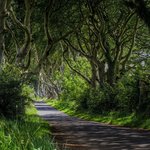
Islands punch well above their weight for walking, because the land has never been carved up by motorways. Look for oak, birch and hazel coppice with bluebells in late April and May, and red squirrel strongholds on several of the larger wooded islands. An Ordnance Survey Explorer map of the area will show rights of way and permissive paths that don't always appear on phone apps.
A good island day is two contrasting halves: a shaded woodland loop in the morning, then a cliff or dune path in the afternoon with the sea on one side. Distances of three to eight miles are plenty — the terrain on coastal paths is slower than the map suggests, with stiles, sand and short sharp climbs. Keep dogs on leads near livestock and on cliff edges, and give nesting seabirds a wide berth between April and July.
Camping on the island
Small tent-only campsites tend to sit within walking distance of the ferry port, and many are little more than a mown field, a cold water tap and a compost loo. That's the charm. Some take bookings, some are first come, first served, and a few ask you to pitch no later than early evening so nobody is hammering pegs in at midnight.
Wild camping rules differ across the UK. In Scotland, lightweight, leave-no-trace camping is permitted on most unenclosed land under access legislation. In England and Wales, you generally need the landowner's permission, and many islands restrict it entirely. If in doubt, ask at the village shop or the campsite — people are usually generous with advice and clear about where not to go.
- Leave no trace: bury human waste at least 30cm deep and 50m from water, streams and paths. Pack out all litter, including food scraps and tea bags.
- No open fires. Use a camping stove instead; even a small fire scars fragile dune and woodland ground for years.
- Midges on the west coast and in damp woodland are fiercest from June to August, especially at dawn and dusk. A head net weighs almost nothing and saves whole evenings.
Cafés, village shops and island provisions
Island food is one of the quiet joys of a car-free trip. Expect proper coffee and homemade cake after a morning's walk, seafood landed that morning, and a café that closes at four whether you're still hungry or not. Opening hours are shorter than on the mainland, Sunday trading is patchy, and a shop that shuts for lunch will do exactly that.
Carry cash as a backup, fill your water bottle wherever you can, and if you want a hot evening meal, book a table in the morning. Honesty boxes for eggs, firewood or campsite fees are common — bring coins.
When to go and what to pack
Late spring and early autumn are the sweet spots: quieter ferries, softer light, and fewer midges than high summer. Weather turns quickly on exposed coasts, so pack for three seasons in one day.
- Waterproof jacket and overtrousers, plus a warm mid-layer
- Broken-in boots and spare socks — wet feet ruin the best walk
- Paper map and compass, and a charged power bank
- Head torch, midge head net, water bottle, small first aid kit
- Cash, a reusable mug and a bag for anything you carry in
Book the crossing, pack light, and let the timetable do the planning for you. The best island days are the ones where the only decision left is which path to take.





John Doe
14 January, 2022Having no content in post should have adverse..
Chauffina Carr
10 April, 2022We use these tests all time! Killer stuff!
Jim Séchen
16 July, 2022Thanks for all the comments, everyone!